
Neurofeedback: Exercise For The Brain
Neurofeedback is a non-invasive, evidence-based brain training technique designed to improve mental and emotional well-being by harnessing the brain's natural ability to adapt and self-regulate.
Train Your Brain to Work Better — Naturally
"Study after study has shown that the symptoms of attention deficit disorder can be controlled through biofeedback... and it can make a huge difference in a child's learning ability and self-esteem."
Dr. Phil McGraw, Ph.D.
Syndicated Talk Show Host, Bestselling Author
Foundations of Neurofeedback
Everything you need to know to understand how neurofeedback works.
Foundations of Neurofeedback
Neurofeedback is a non-invasive, drug-free therapy using real-time brain feedback to help you regulate mental states and unlock your brain's potential.
What Is a Neuro Assessment?
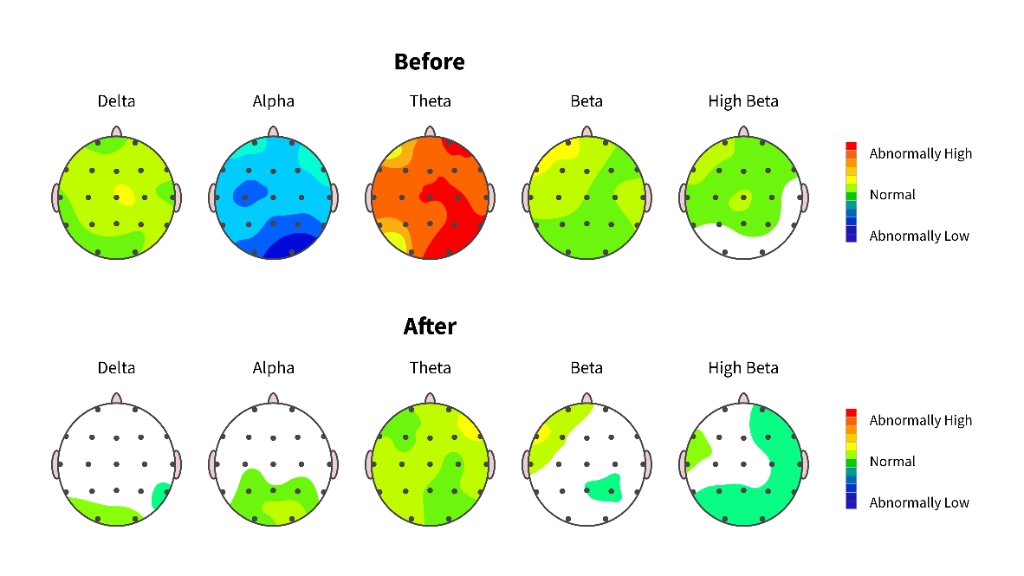
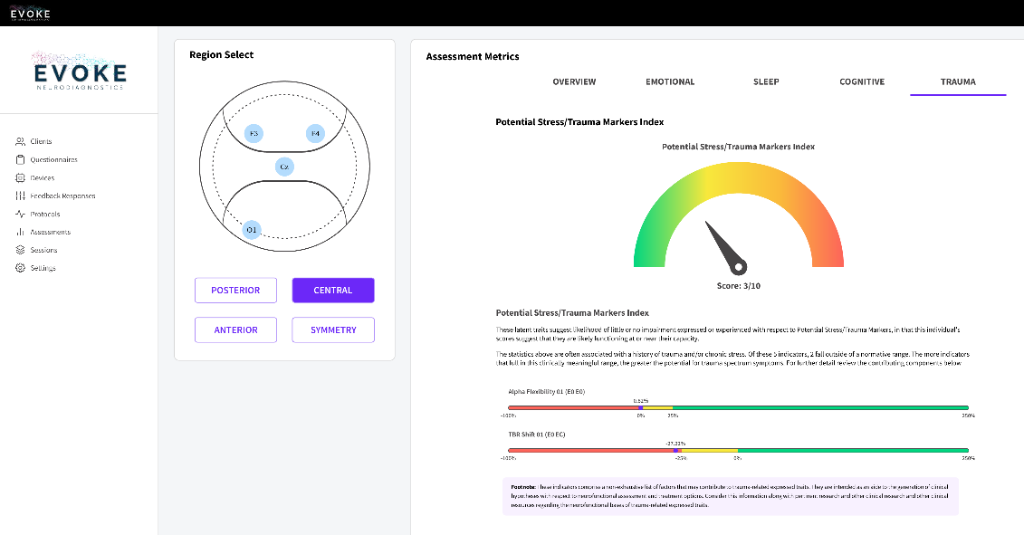
A detailed brain map (qEEG) that records your unique brainwave patterns and compares them to optimal ranges, revealing areas that need training.
What Is Neuroplasticity?
Your brain's ability to form new neural connections and rewire itself. Neurofeedback harnesses this power to create lasting, meaningful change.
What Is Operant Conditioning?
The reward-based learning principle that powers neurofeedback—your brain learns to sustain healthy brainwave patterns through positive reinforcement.
Understanding Neurofeedback
Neurofeedback, also known as EEG biofeedback, is a brain training technique designed to improve mental and emotional well-being by monitoring brainwave activity in real-time. By harnessing the brain's natural ability to adapt and self-regulate, neurofeedback offers a powerful tool for enhancing outcomes.
Over time, life's stressors create inefficient neurologic pathways that regulate your emotions, feelings, and reactions. Neurofeedback allows you to learn how to regulate certain functions so they operate more efficiently and bring your brain activity back to harmony.
By monitoring brainwave activity in real time, neurofeedback helps the brain learn to regulate itself, leading to better focus, reduced stress, and enhanced overall health. The goal is to improve the brain's ability to self-regulate, maintain flexibility, and smoothly transition between states of relaxation and arousal.

How Does Neurofeedback Training Work?
Neurofeedback uses neuro assessment data to assess and train brainwave patterns.
Capture Brain Activity
Sensors placed on the head and ears measure electrical impulses.
Analyze in Real Time
Software compares brainwaves to a database of known symptomology.
Reinforce Positive Changes
Visual and audio feedback rewards the brain for reaching target patterns.
Establish Long-Term Benefits
Repeated sessions strengthen new neural pathways, leading to lasting improvements.

A session typically lasts 20 minutes, while the patient watches their favorite video or plays a game.
This positive reinforcement helps the brain self-regulate more effectively over time.
How Your Brain Adapts:
Forging New Connections
The brain creates new neural pathways based on experience and deliberate training.
Pruning Old Pathways
Unused neural connections fade, making room for new, healthier patterns.
Rewiring for Health
Targeted training shifts the brain from dysregulation to order and resilience.
Neuroplasticity: The Brain's Adaptive Potential
Rewiring the Mind for Resilience and Recovery
Neuroplasticity—the brain's ability to reconfigure its neural architecture—is the bedrock of neurofeedback's promise. For years, scientists viewed the brain as static beyond childhood, but research now reveals its lifelong adaptability.
Neurons that fire together strengthen their bonds—Donald Hebb's famous axiom: "cells that fire together, wire together"—while unused pathways fade. With targeted brain training, neurofeedback taps this plasticity by rewarding healthy brainwave patterns.
For example, a patient in cognitive-behavioral therapy (CBT) for anxiety might internalize coping skills faster when their brain is less reactive, thanks to neuroplastic changes.
This is not a quick-fix—it's a process of rewiring the brain that complements your treatments.
Operant Conditioning: Shape Behavior, Master Results
Learning Through Rewards, Step by Step
How It Works
Measure Brainwaves
EEG cap records live brainwave activity during sessions.
Reward Progress
When brainwaves hit target patterns, the screen brightens and sound increases.
Train the Brain
The brain learns to sustain target patterns through repetition and reward.
Operant conditioning—from B.F. Skinner's foundational 1938 work—is the engine driving neurofeedback's ability to retrain the brain. The principle is straightforward: behaviors followed by rewards increase, while those without fade.
In neurofeedback, the "behavior" is brainwave activity, and the reward is sensory feedback—a movie brightening or a game progressing when the brain hits target patterns.
During a typical 20-minute session, patients wear an EEG cap or headband and watch their favorite video, movie, or play a game. When brainwave activity reaches the optimal range, it's rewarded with positive reinforcement—the screen becomes brighter and sound more audible. If brainwaves deviate, it triggers a subtle change in audio or video feedback.
This operant conditioning creates long-term, positive changes in the brain.
Why It Matters
The neurons in your brain constantly send and receive signals, forming electrical patterns that impact cognition, emotions, and mental well-being. The neuro assessment measures these patterns across five key brainwave types.
By comparing a patient's brain activity to a known database of symptomology, providers can pinpoint areas that need training, regulation, or improvement, creating a truly personalized approach to neurofeedback therapy.
What A Typical Session Looks Like
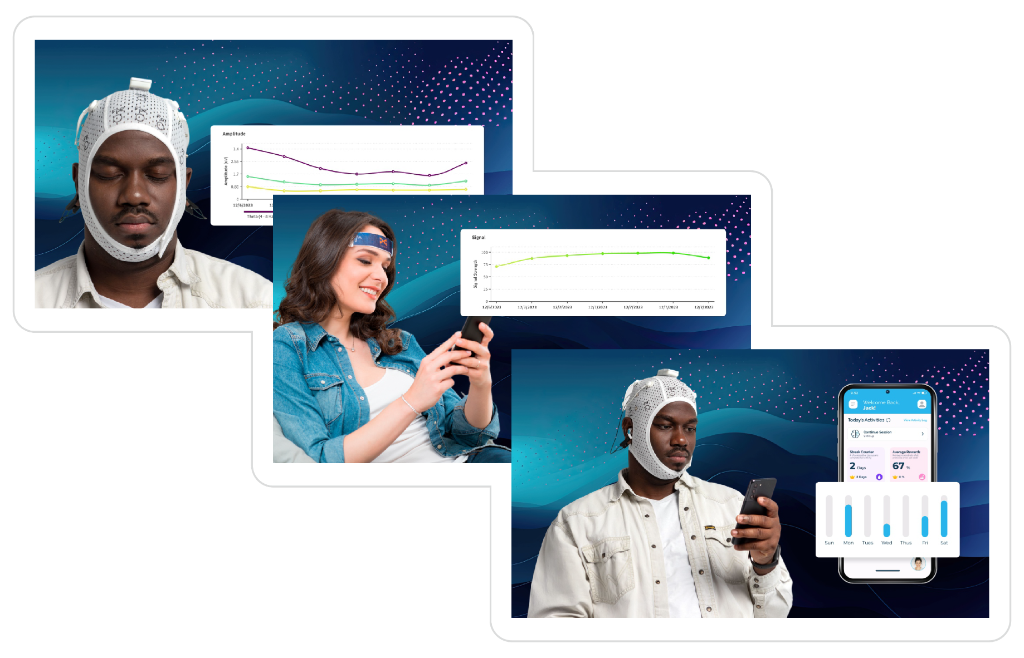
A session typically lasts 20 minutes, while you watch your favorite video or play a game. During this time, sensors placed on your head and ears measure your electrical brain impulses. The software compares your brainwaves to optimal patterns in real time.
When your brainwave activity reaches the target range, you'll receive positive reinforcement—the screen becomes brighter and sound more audible. If your brainwaves deviate, you'll notice a subtle change in audio or video feedback. This positive reinforcement helps your brain self-regulate more effectively over time.
It's as simple and comfortable as sitting back and enjoying your favorite entertainment—all while your brain learns to optimize its own function.
Creating Your Unique Brain Training Program
We combine brain mapping, targeted questionnaires, and medical history to design a personalized, drug-free brain training program tailored specifically for your patient.
Brain Mapping & Measurements
Advanced EEG technology captures your unique brainwave patterns and identifies areas that need optimization.
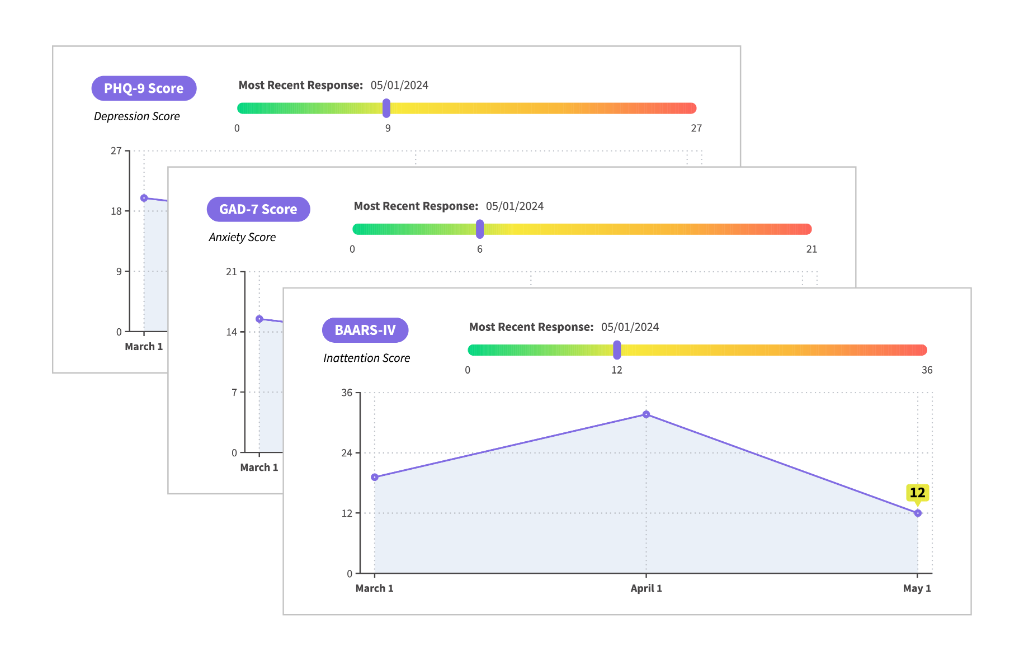
Targeted Questionnaires
Comprehensive assessments capture your symptoms, concerns, and health goals to ensure a truly personalized approach.
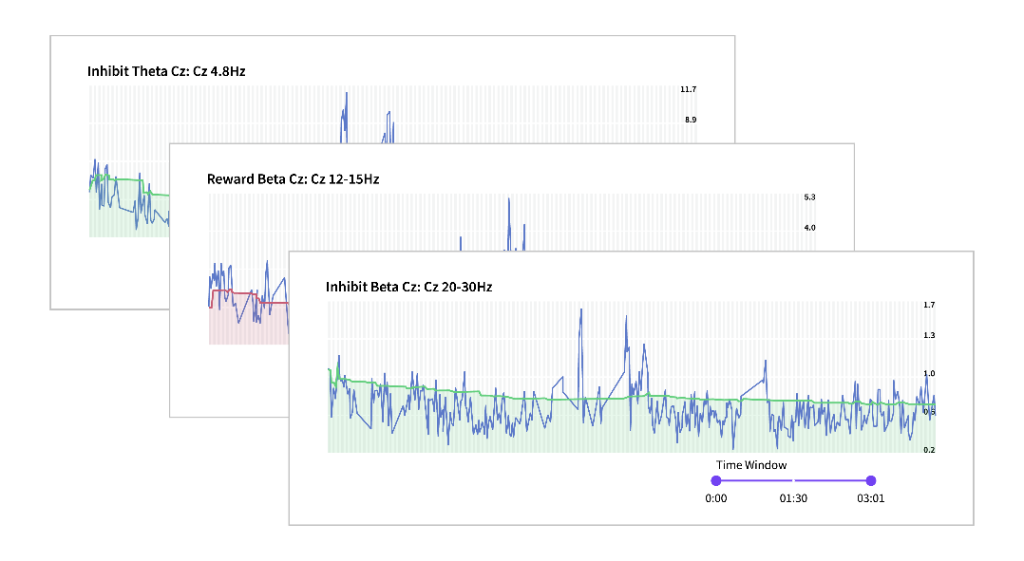
Real-Time Training
Combined with your medical history and intake information, we create a precise, personalized brain training protocol.
Clinical Proof and Success Stories
Neurofeedback is backed by extensive research and used by clinicians worldwide. It has been shown to improve focus, mood regulation, and cognitive function over time, with clinical studies showcasing measurable results.
Patients managing anxiety, depression, ADHD, PTSD, and other conditions have experienced positive outcomes through neurofeedback training.
See the Research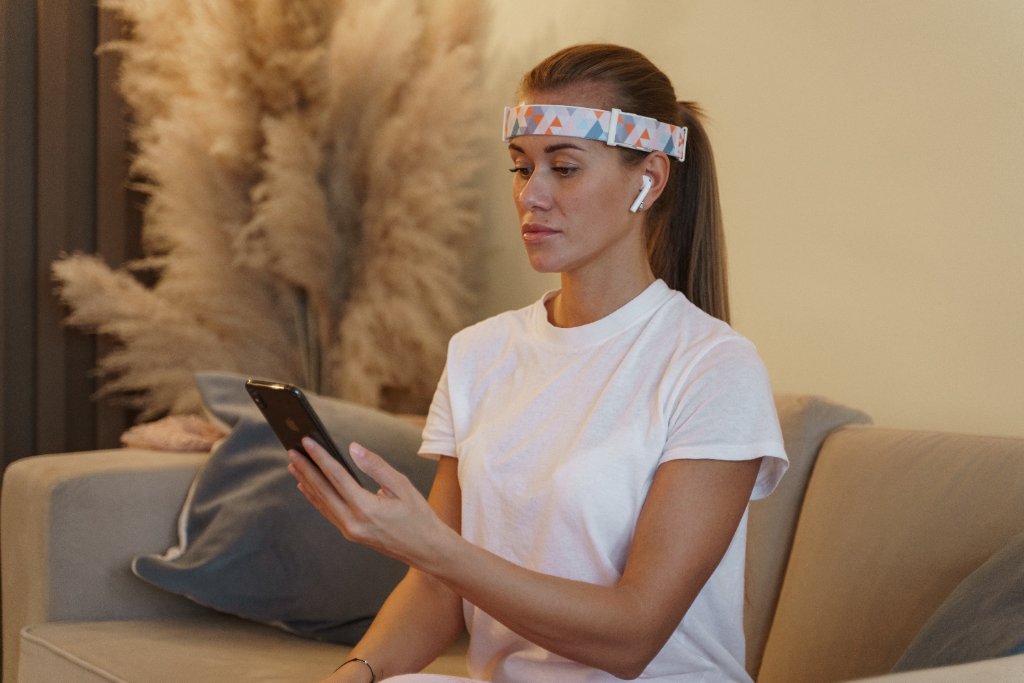
Why Choose Neurofeedback?
Discover the transformative benefits of evidence-based neurofeedback training.
Addresses the Root Problem
Unlike medications that mask symptoms, neurofeedback targets underlying brainwave imbalances, promoting natural, holistic healing for sustainable outcomes.
Evidence-Based and Targeted
Neurofeedback directly addresses brainwave imbalances, offering relief for conditions like anxiety, ADHD, insomnia, and stress—often faster than talk therapy.
Non-Invasive and Drug-Free
Our program is safe and side effect-free, appealing to those seeking natural solutions without pharmaceutical intervention.
Personalized and Supported
Certified coaches provide tailored protocols and ongoing virtual support, ensuring a high-quality experience without in-person visits.
Scalable Impact
By optimizing brain health in just 90 days, you can improve focus, emotional resilience, and overall well-being, reducing the need for long-term interventions.
100% Remote Convenience
Train from the comfort of your own home with no need for office visits, saving you time and travel expenses while fitting seamlessly into your life.